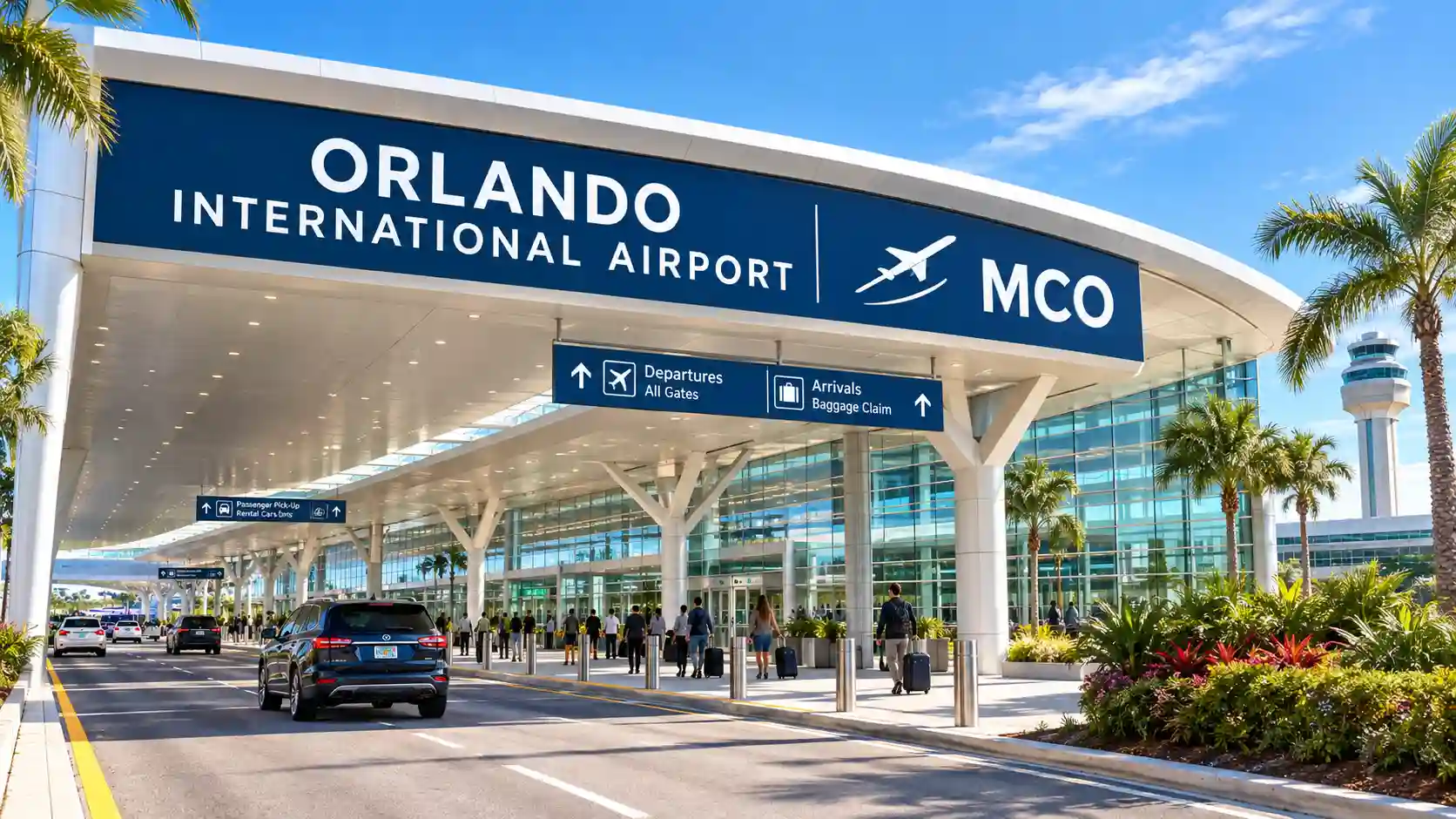
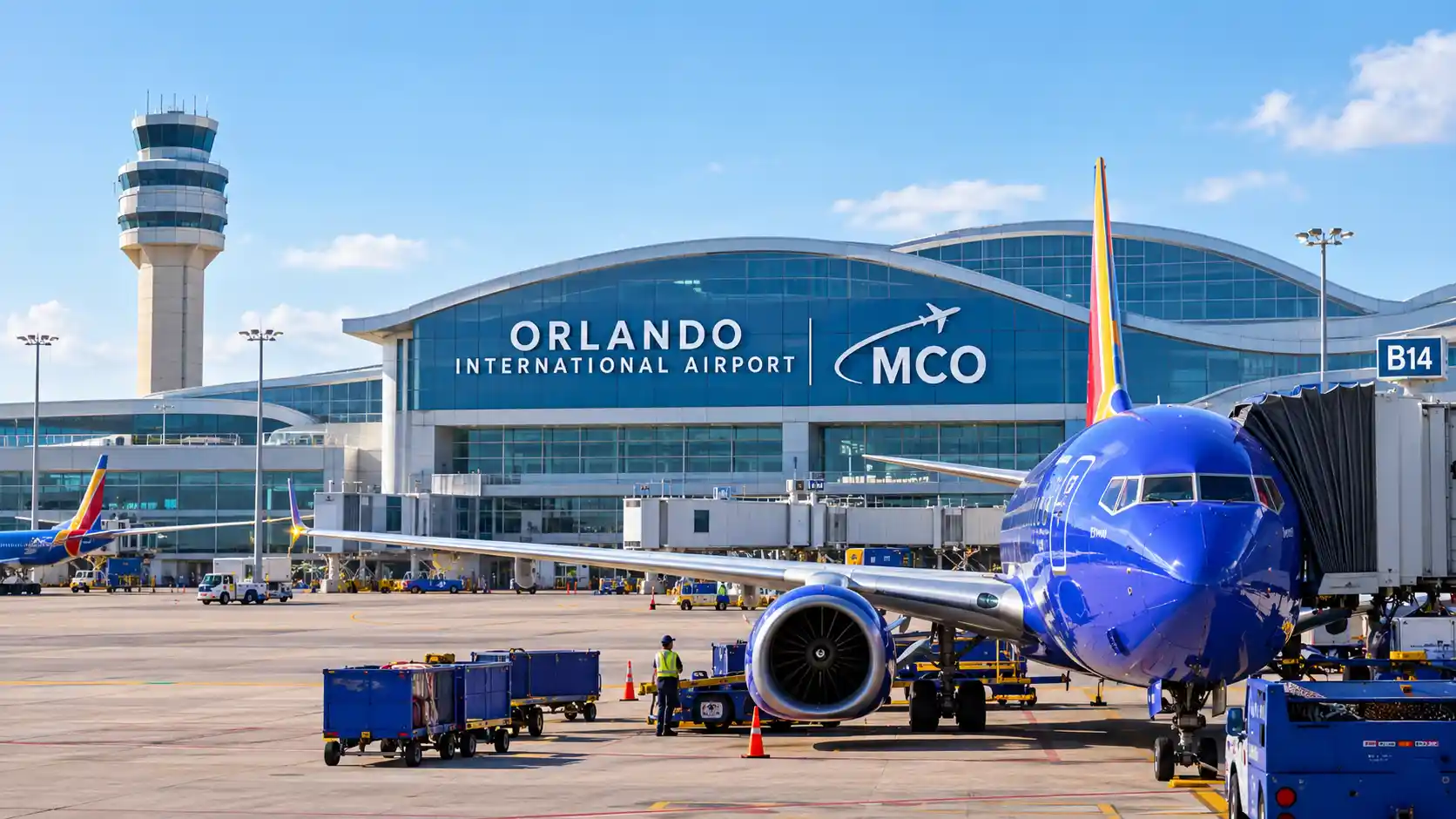
Orlando International Airport (MCO) is a major commercial aviation hub. Operated and managed by the Greater Orlando Aviation Authority (GOAA), MCO serves Central Florida and the Orlando area. The airport connects an extensive network within and outside the country. As a major airfield, it handled 57.68 million passengers in 2025, which is slightly higher than 2024 (57.21 million passengers). These numbers make it the busiest airport in Florida, 7th busiest in the United States, and 25th busiest in the world.
In 2025, MCO Airport recorded 386,904 aircraft operations. This includes cargo services, commercial passenger flights, general aviation, military movements, and air taxi activities. The wider network of the airport includes destinations across the USA, Latin America, Canada, the Caribbean, and Europe. This has helped the traffic of international passengers reach up to 8.46 million in 2025, up from 7.81 million in 2024. It also handled around 220,832 tons of cargo in the same year.
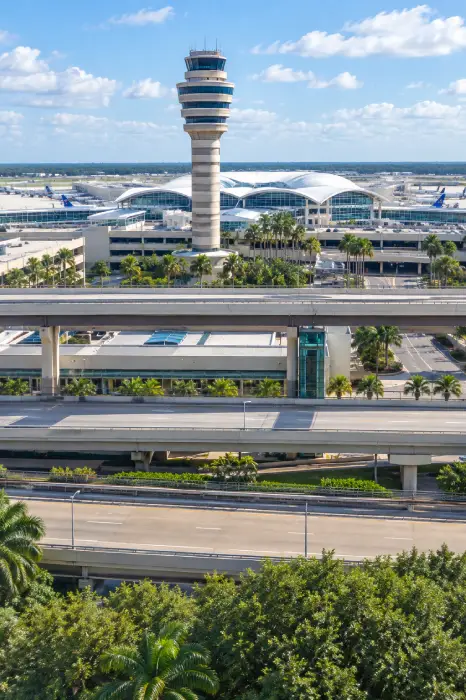
Currently, Orlando Airport MCO has 3 functional terminals – A, B, and C, with 4 runways and multiple concourses. To have extended route coverage, MCO has expanded/added 45 new routes to Paris, Munich, Hamilton, Madrid, Lima, etc. Furthermore, Orlando Airport has introduced new passenger charter services in February 2026 to Tokyo.
MCO has also invested in passenger experience and long-term capacity through a 2026 Capital Improvement Plan of around USD 5.9 billion. Some major projects include the expansion of Terminal C (valued at USD 462 million) that will add 5 new gates. Alongside, Airside 2 will also be reconstructed and expanded (the airport has allocated a budget of USD 374 million) to have 7 more gates. Lastly, some investment has also been made to improve passenger facilities and parking capacity.


 Ryan Morgan
Read article
Ryan Morgan
Read article